
Canoe markers
Set each canoe at Fern Landing. A marker shows where an angler is observing, not who owns the water.

Celunavik presents Canopy Cast, an independent fictional board game about noticing what changes beneath the leaves.
Paddle from bright shallows to shaded pools. Pair a lure with the water, turn a missed cast into a field note and build a collection that tells the story of the river.
A cast is a small puzzle: two clues in the water, three possible lures. Sometimes a field note is more useful than another fish.
Shuffle the habitat tiles, prepare the shared tackle and choose an observation token. The angler who names a tree begins.
Set each canoe at Fern Landing. A marker shows where an angler is observing, not who owns the water.
Lay out shallow, reed and deep-pool tiles. Keep the depth and clarity symbols visible to every player.
Give each angler a feather fly and copper spinner. The deep jig begins in the shared tackle tray.
Place six leaf counters by the board. Earn them for useful observations and spend one to exchange a lure.
The board branches around giant fern roots. Its symbols tell you what is happening beneath the surface before you spend a lure.
Clear water rewards a feather fly. A shower can change the answer without moving the canoe.
Observe the printed depth before making a cast. Reeds offer a field leaf when you pass quietly.
A clear pool needs the deep jig. Cloudy water asks for copper, even here.
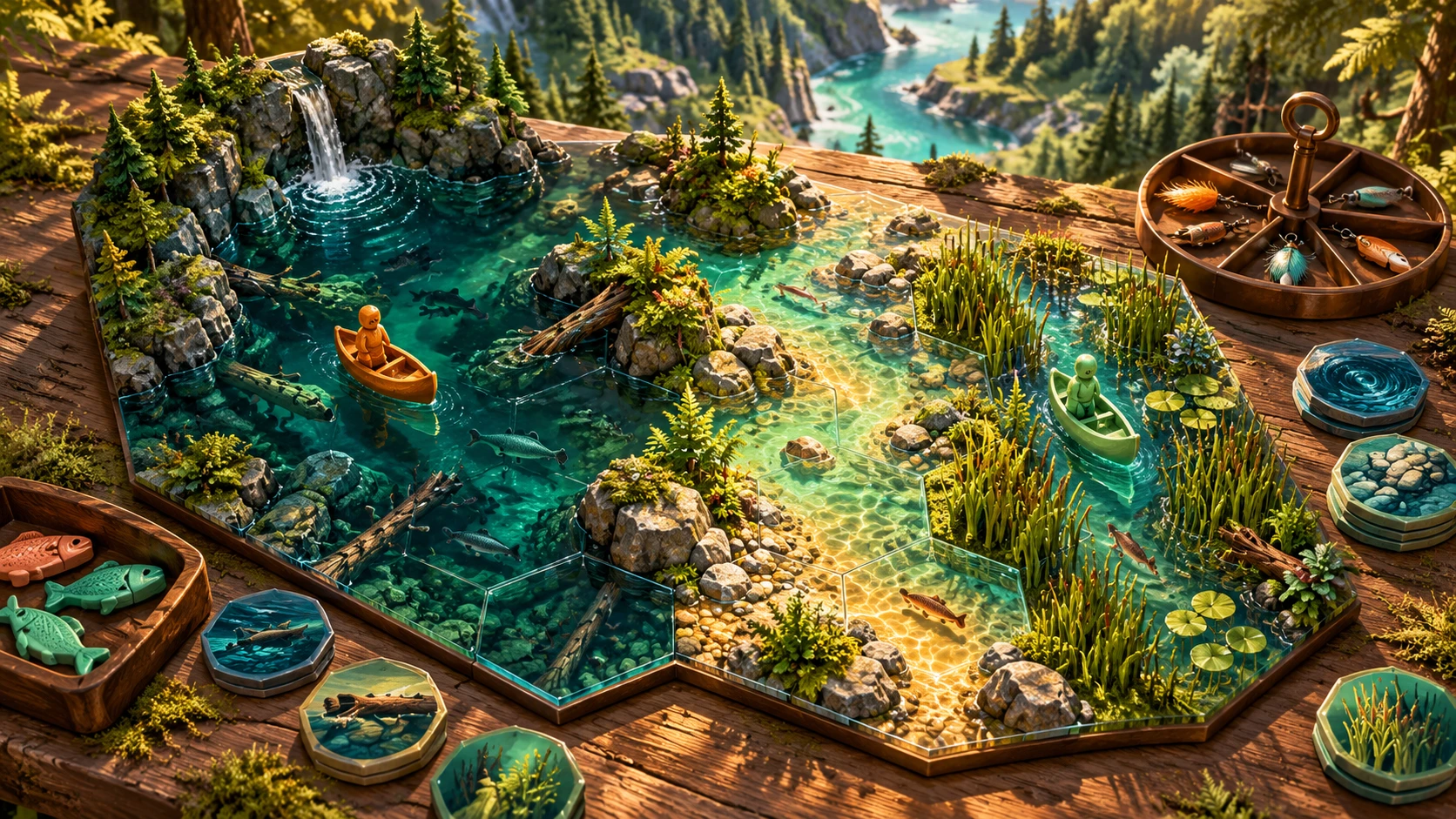
Everyone can see the same two clues. Keep an explanation short enough that the next canoe is already ready.
Move to an adjacent habitat. Staying still is allowed if another lure would suit it.
Say the depth and clarity aloud. The whole table can check the same symbols.
Choose one card from your tackle pair. A mismatch becomes a field observation.
Use the habitat matching rule; there is no hidden success roll in this concept.
Bank a matched catch or take one field leaf, then pass the observation token.
These cards introduce the observer, the deep-pool catch and the tackle choices that make Canopy Cast tick.
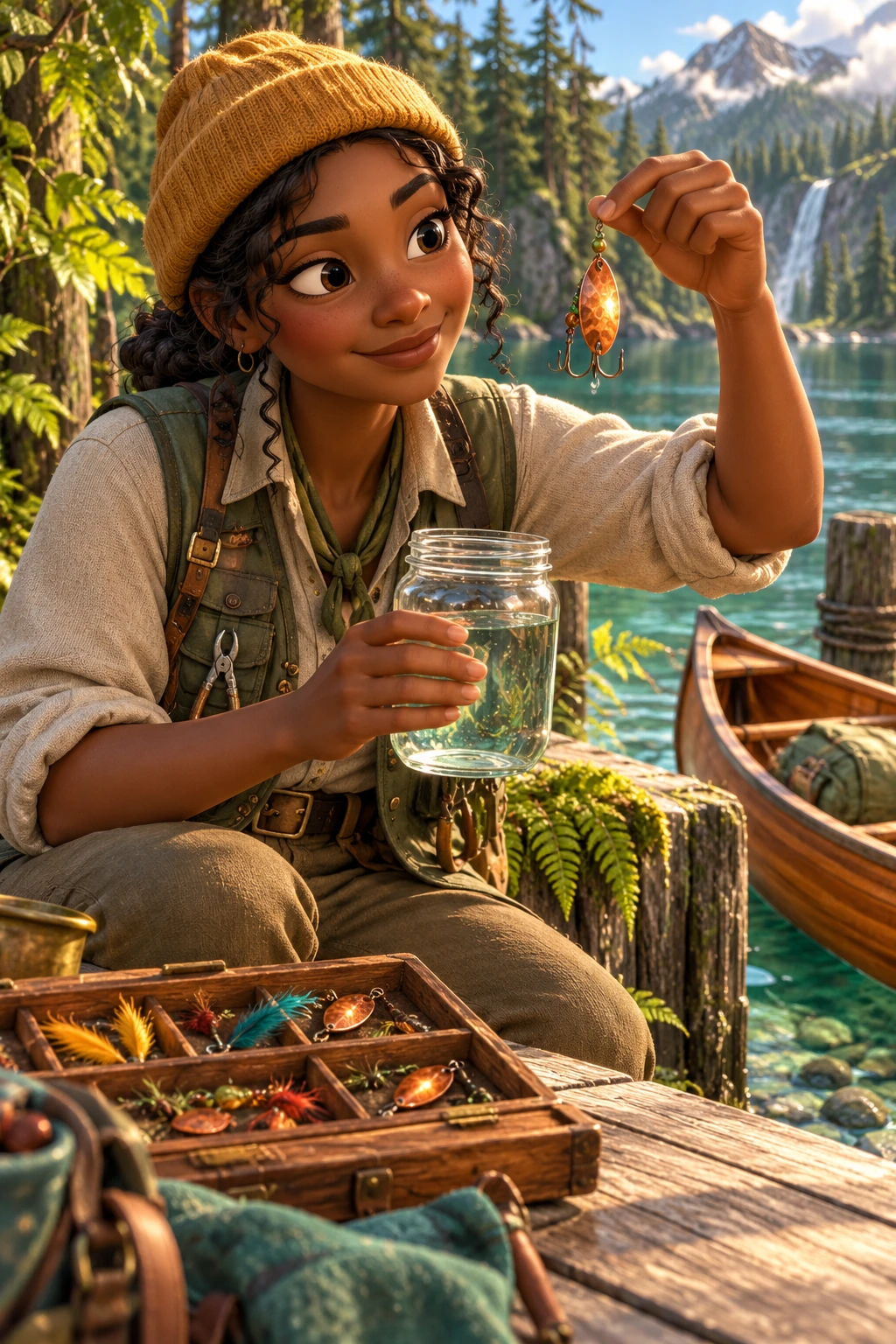
Before a cast, Noor may exchange one field leaf for a look at the next habitat. Her strength is making the uncertainty visible.
Ability · observe ahead
The bass favours deep water. A jig reaches its pool; when the water is cloudy, choose the copper spinner instead to offer a brighter signal.
Catch value · 8 canopy points
Feather for a clear shallow, copper for clouded water, and a jig for a clear deep pool. Read the habitat before choosing a favourite.
Rule · one lure per cast
Tasks reward a series of observations. Bonuses create one useful exception. A clear explanation matters more than claiming the card quickly.
Field taskKeep the card visible while recording its visits.
One-cast bonusState the exception before selecting your lure.


Visit a shallow, a reed bed and a deep pool. The visits can be in any order, and catches are not required.
Exchange one lure for the shared jig before a cast. Put your old card face-up so the next angler can borrow it.
Record two different unmatched casts, then describe the lure that would have fitted each habitat.
Treat one cloudy shallow as clear for your own cast. Other canoes keep the printed clarity until the next event.

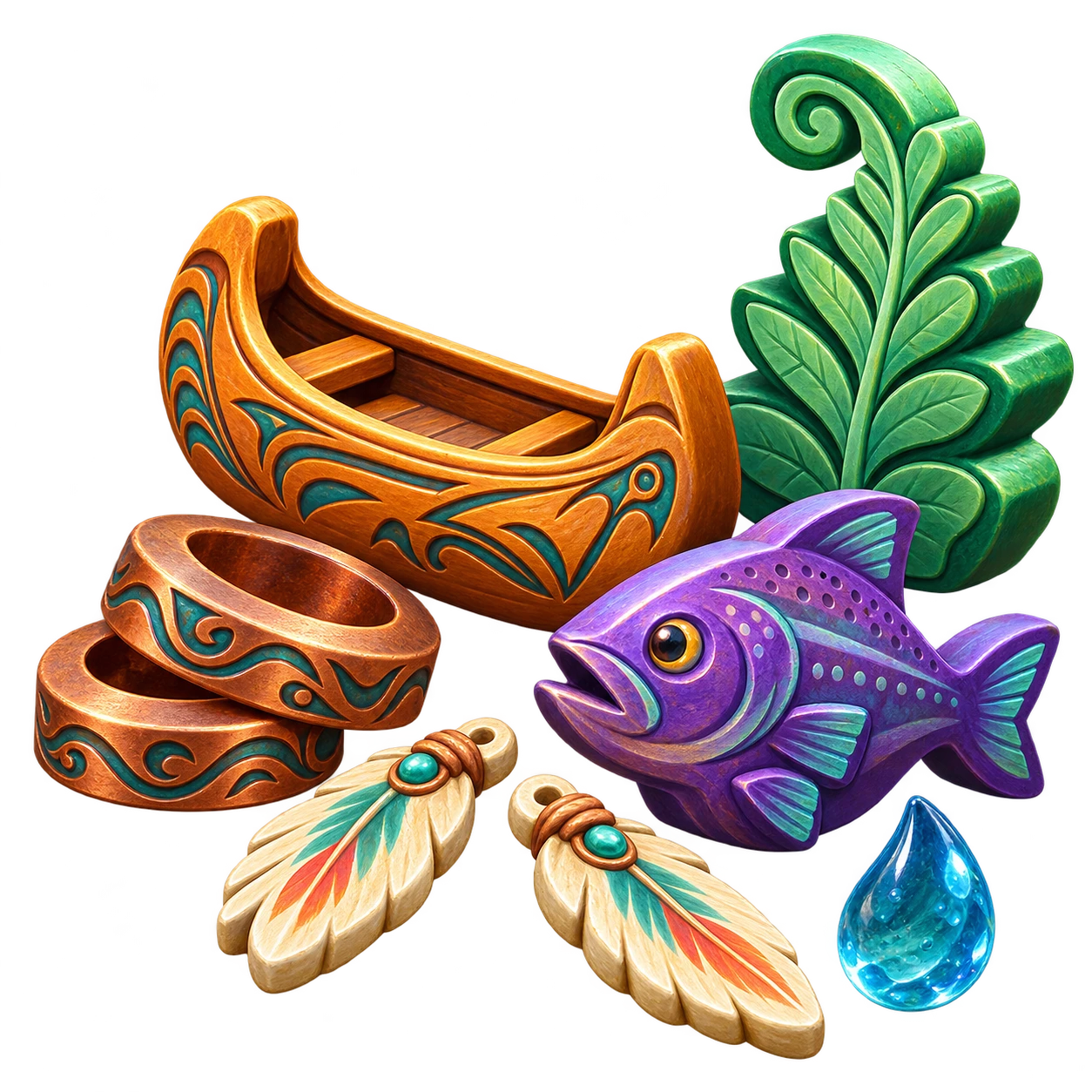
When the third leaf is taken from the shared bowl, a shower crosses the board. Turn every shallow tile to its cloudy side for one full round.
Leave deep-pool depths as printed. The new clarity is public information, so nobody has to guess which matching rule applies.
Matched catches score immediately. Field leaves help with tackle; unused leaves never inflate the final total.
| Collection | What it records | Points |
|---|---|---|
| Shallow perch | Clear shallow + feather | 3 |
| Copper bream | Cloudy water + spinner | 5 |
| Jade Canopy Bass | Clear deep pool + jig | 8 |
| Habitat survey | All three places visited | 5 |

The river looks different after a few thoughtful casts. Try a cloudy deep pool next and see why the brightest lure changes the answer.
Return to the lure labNo. Depth, clarity and lures are simplified fictional symbols. The matching lab explains Canopy Cast rules; it is not advice for real water, equipment or wildlife.
Yes. Take a field leaf and name the missed clue. Leaves can be exchanged for tackle, so learning changes the next decision.
That is the deliberately simple rule of this fictional game. The bright copper symbol overrides the depth choice whenever a tile is marked cloudy.
The matching demonstration resets on reload. Only the optional notice preference is saved locally; contact submissions are handled separately as described in Privacy.